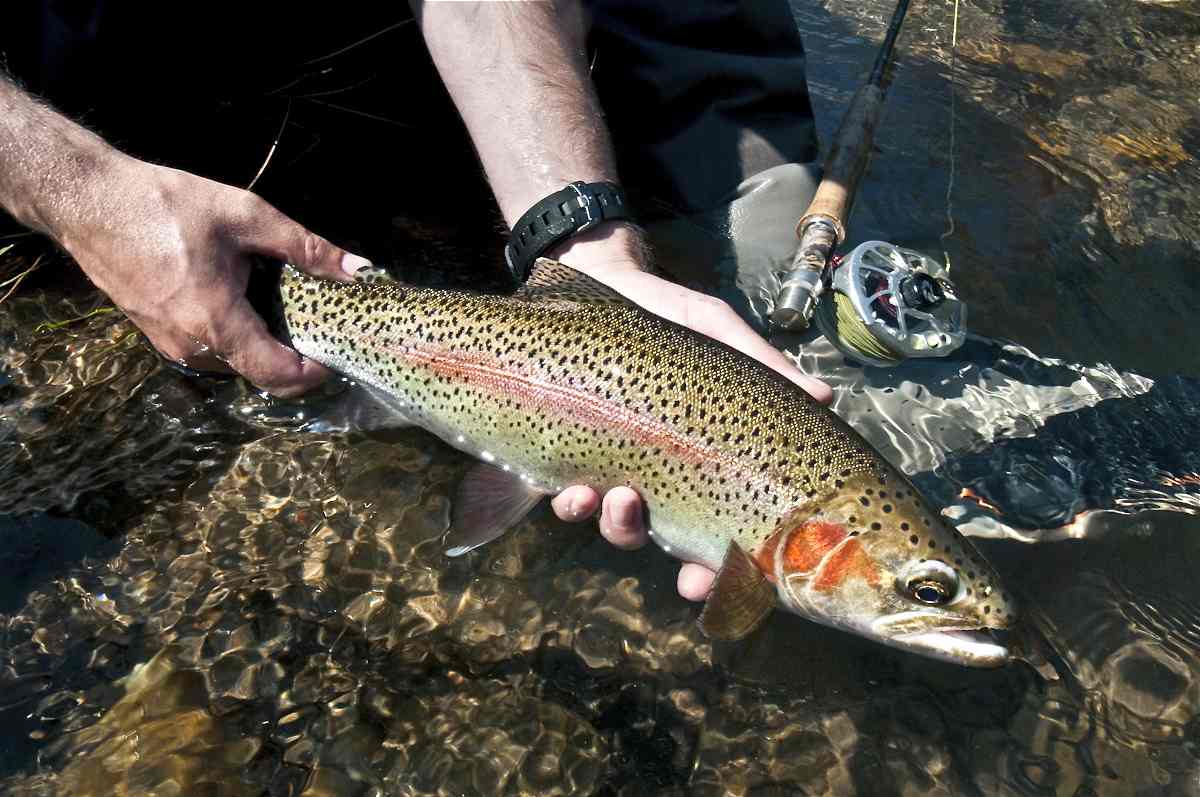
The
Monocacy Creek Watershed Association will be planting "Live Stakes" into
the creek banks on the following days:
Sunday, November 14, at 12:30 pm: Park at Quiet Core (1440 Schoenersville Rd., Bethlehem)
Monday,
November 15, at 11 am : Gertrude Fox Conservation Area. Park
in the Oasis Community Center lot (3410 Bath Pike, Bethlehem) just across
Center Street from Panera.
Planting
live stakes is a simple process of inserting a tree branch into the stream
bank,no digging required!
We
need about 6 volunteers for each day, and expect
to be done in about one hour.
If
you have waders or hip boots, bring them. We have four pairs of waders and
boots to loan you, if needed. Gloves are recommended. This is an outside
activity, so dress accordingly.
Please email Jane Cook of the MCWA :monocacycrkwa@gmail.com to RSVP.
Another great opportunity with the MCWA! Please consider helping!:
On Saturday, October 17, from 9 to 11, we will be planting tree seedlings along Monocacy Way. These were bare-root trees in March that we potted up into small 6- to 8-inch pots, and they’ve been growing well! Time to get them into the creek riparian buffer areas so they can really grow.
Parking for this stretch of Monocacy Way is in the Quiet Core lot on Schoenersville just east of the bridge over the creek, and directly across the street from St. Lukes facility there (the old racquetball club) and the entrance to Burnside. The address is 1440 Schoenersville Rd.
Bring a shovel, gloves, drinking water and a mask. If you have waders, bring them, but they are necessary. We will organize it so that you will be able to work alone as we dig the holes, set the trees, and put protection around them, sort of like an assembly line.
The Northampton County Conservation District, in partnership with the Penn State Master Watershed Stewards, and Wildland's Conservancy, have started phase II of a stream restoration project on a privately owned piece of property on Biery's Bridge Rd. The owner has property on both sides of the stream, which makes it an ideal location for projects. Last fall, the homeowner financed the placement of 1 Ton of rocks to be placed in- stream, and now the hope is to stabilize the banks with riparian (stream bank) plantings to help reduce erosion. The funding goal is $2500, and will be used towards the purchase of plants, tree and shrubs. The partner groups, and the homeowner, are hoping to use this as an example for other landowners what is possible through stream restoration. Any amount helps. The Go Fund Me is being administered by the Monocacy Creek Watershed Association and 100% of the money raised will be used for the purchase of plants/ supplies . You can donate directly below or CLICK HERE.
Bethlehem Township is hopeful that a state grant helps put a stop to frequent flooding in Municipal Park that renders the township-owned recreational area a soggy mess for days after rain.
The Pennsylvania Department of Environmental Protection awarded the township a $57,600 grant this week to kick off the Nancy Run tributary restoration project. The township is providing matching funds and applying for another grant to complete the work, said Kate Ebel, senior environmental scientist for the Wildlands Conservancy, which is partnering with the township on the restoration.
Trout Unlimited and Orvis will be teaming up for an Embrace- a- Stream project challenge which runs for 1 week, Nov. 6 thru the 12th. Individuals who donate as little as $10, can help the Forks Chapter win their share of an additional $50,000 in prize money.
Here's how it works:
Starting Nov. 6th you can go to this website: https://embraceastream.org/projects/forks-of-the-delaware and make a donation via credit card directly to the project. The Chapter will use that money and any prizes awarded to fund the project.
Prizes are based on the total number of gifts, and the total amount raised and are awarded from a $50,000 prize pool provided by Orvis and Trout Unlimited. All projects are broken into one of three categories - small, medium and large (based on chapter membership size) - so that each project is competing against similarly sized organizations. The prize structure is as follows for each of the three size categories:
- Most Unique Donors - $5,000 prize
- Most Money Raised - $2,500 prize
- Most gifts of $25 or Higher - $1,500 prize
- Most gifts of $10 to $24.99 - $1,000 prize
In addition, there are prizes of $100, $250 and $500 that will be given out throughout the week to randomly selected donations. For example, a total of 42 randomly selected $10 donations will unlock prizes of $100 and a total of 21 randomly selected $50 donations will unlock prizes of $500. You never know when your donation - no matter the size - will unlock one of these random prizes!
Bushkill Creek Restoration Assessment and Prioritization Project
A “Class A” trout fishery, The Bushkill Creek flows some 16
miles from its headwaters in the Blue Mountains to its confluence with
the Delaware River in historic Easton, Pennsylvania. While the stream
has a significant reproducing population of wild brown trout, conditions
in the creek have been degrading over the past 15 years. The lower
Bushkill meanders through mostly urban/suburban landscapes, which has
contributed significantly to the creek’s current lack in quality trout
habitat. One section that runs entirely through a public park system
within three separate municipalities has suffered the most. A
combination of bank erosion, sedimentation, and loss of its natural
thalweg, primarily caused by substantial amounts of run off from
upstream development and recent flood events, has led to the present
degraded condition. The 1.9-mile stretch is in desperate need of
restoration to bring macro-invertebrate and trout habitat back to a
truly “Class A” condition. The Forks of the Delaware Chapter is planning
a large-scale project that will involve conservation partners and state
and local agencies, but our first step is to make a thorough
science-based assessment of the creek. This entails identifying optimal
locations for installed structures and developing a list of materials,
equipment, and contractor hours needed to implement the restoration.
This initial planning stage is pivotal to the permitting process, which
will allow us to most effectively restore the riparian and in-stream
habitat of the Bushkill Creek.
Data shows urban stream restorations fall short of water quality goals
By Jeff Gillies on November 21, 2013 http://www.fondriest.com/news
The urge to undo the damage humans have heaped on many waterways has spurred a billion-dollar stream restoration industry with a mixed track record. Water quality across the United States has improved over the past half-century. But as a recent case study of an urban stream in North Carolina shows, restoration projects often fail to achieve water quality goals when they’re driven by good intentions but not good data.
Early stream restoration efforts were based on assumptions about what would make a stream better, said Kristan Cockerill, a water policy analyst and assistant professor in Appalachian State University’s Department Cultural, Gender and Global Studies.
AUGUSTA — The first water to flow through when Edwards Dam was
breached 15 years ago was brown and thick with mud from the earthen
cofferdam built for the occasion.
Environmental and fisheries advocates say the Kennebec River has been
looking better and getting healthier ever since the 917-foot-long dam
was removed on July 1, 1999, returning 17 miles of upstream water to
free-flowing after they were blocked by the dam for the previous 172
years.
June
2, 2016 - Conservationists can now point to the largest dam removal
project in the U.S. as a success story. The ecosystem of Washington's
Elwha River has been thriving since the removal of its hydroelectric dam
system. Recent surveys show dramatic recovery, especially in the near
shore at the river's mouth, where the flow of sediment has created
favorable habitat for the salmon population. A new generation of salmon
species, some of which are endangered, are now present in the river.
Some hope that the restoration of the Elwha River will become a shining
example for the removal of dams across the U.S.
In-stream wood is critical for supporting wild trout. Photo by Louis Cahill
Wood is Good!
Several years back, one of my favorite wild trout streams, only a few
miles from my house, got slammed with tornados and high winds (from back to back hurricanes that had moved up from Florida).
The aftermath from the strong storms, downed dozens, upon dozens of
trees along the stream. I was heartbroken at first when I witnessed all
the downed wood. The first thing I thought about, was how much critical
shade the stream had lost from the destruction of the large stretches of
tree canopy along its banks. And that made me nervous water
temperatures would thereby increase significantly during the summer
months, posing a real threat to year round survival of the wild trout
that lived there. I wasn’t alone in my worries, as I quickly found out
when I talked with my local fly fisherman in the area. The large
majority were in total agreement. We thought the best thing we could do,
was go in and strategically remove as much wood as we could to avoid
massive silt build ups, which we thought at the time, was causing the
stream flow to slow down, and not only contribute to warming the water,
but also choking out the natural aquatic bug life. Looking back now, as a
much more educated angler, I know see the massive influx of in-stream
wood cover that was gifted to us by the hurricanes, was not an
environmental catastrophe, but actually a blessing in disguise for our
beloved trout stream.
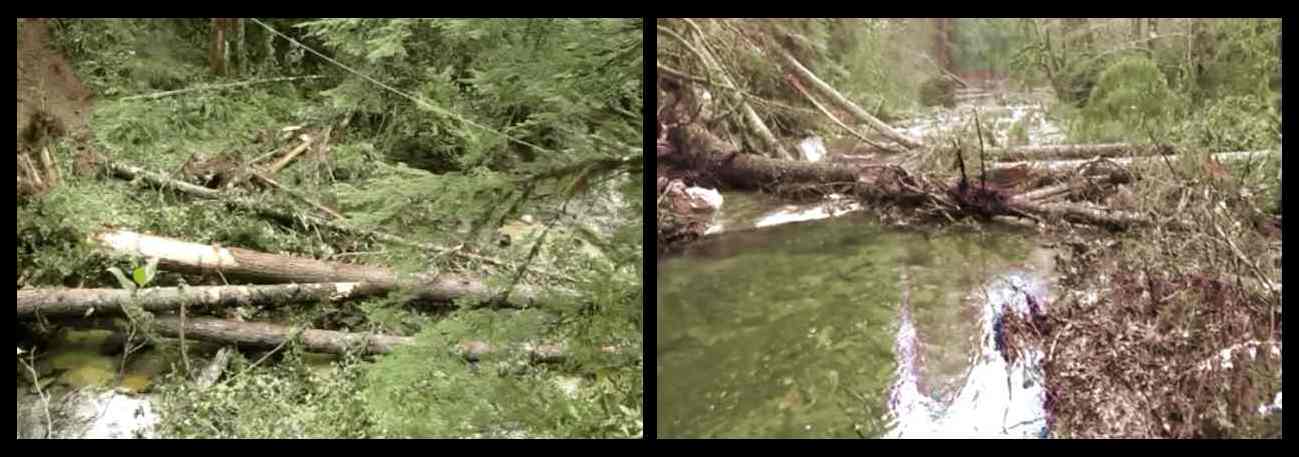
An example of a manmade logjam.
The truth is, a key element that many of our trout streams lack, is
enough in-stream lay downs and log jams provided by fallen trees during
storms. They’re critical for maintaining and supporting a healthy
ecosystem, because they provide cover for all sizes of fish, both mature
and juvenile, and they also hold back gravel critical for spawning
grounds, and leaf litter from being washed out during high flows. The
natural obstructions that they provide, also help to create new riffles
and pools, thereby decreasing the chances of long stretches of trout
streams ending up running straight as an arrow, widening over time, and
becoming too shallow and barren of sufficient trout habitat.
I recently ran across a video on The Caddis Fly: Oregon Fly Fishing Blog,
that showcased the local DNR going in and creating manmade logjams.
They did this by strategically pulling down trees with heavy equipment
on a trout and salmon stream, that overtime had been almost completely
flushed out down to bare bedrock over the years. The goal for the
project was to improve habitat, stabilize and increase the amount of
gravel to improve spawning habitat, and also increase the number of
riffles and pools. The video hit home with me and made me ask the
question, “Why aren’t we doing more of this across the United States on
all of our cold-water watersheds?”
Please watch the short video, support their efforts if your financial
resources permit, and at the very least, take the time to spread the
word with your local anglers and TU groups, about the importance of
in-stream wood in our fisheries. Yeah, the added wood in our streams and
rivers will cause us to lose quite a few more flies in snags. However,
the long-term health advantages of the ecosystems on our salmonid
watersheds, by the increase in available wood cover, will end up paying
back our fly fishing endeavors ten fold over time.
Members:
I hope your summer is going well. Below are some summer volunteer opportunities for some great causes. Contact info for each project is included, please direct any questions to those people. Thanks, hope to see you at some of these events.
1. Fish Habitat Construction of Fry's Run County Park: July 21, 22, 23 WEATHER DEPENDENT.
Contact: Jim Wilson james-wilson@northamptoncd.org
2. JAKES (Juniors Acquiring Knowledge Ethics and Sportsmanship) Youth Field day is being held at
Ontelaunee Rod and Gun Club, New Tripoli, on August 2, 2014. Contact: Dale Steventon adms@ptd.net
3. Minsi Trails Council BSA "Cub Scout Fishing Derby" on Saturday,July 26th.at Camp Minsi in Mt.Pocono
Need help with following stations:
1) Stream Critter's(macro's)- John Mauser
2) Smart angler - Fritz Hamlin n Brian Wagner
3)Casting - Phil Hublitz
4) Fishing Knots - Steve Grover
5) Lures - Greg Schierer & Will Kline
6) ID parts on Fish - Brian Dungan
7) Fly Tying- Dave Abraham, Dale Steventon, Jack Fakula Contact: Dave Abraham Nymphingguy@gmail.com
In a piece of good news for our stream, it looks as though Bethlehem Township will be making some major improvements to the stormwater system that empties into the Monocacy Creek. After reading THIS article though, some Monocacy TU members were concerned about the project. As it turns out some of the information in the article was not complete, and overall this will be a positive for the stream. The plans call for a new BMP (storm water pond) to be constructed and a new channel to be constructed that would empty into the creek. This pond and channel will hopefully reduce the velocity of the storm water as it enters the stream, and also reduce the sediment load of the water. The design firm estimates it could reduce the sediment load by thousands of pounds per year.
In a last minute attempt to help the City of Bethlehem with it's Johnson Park Dam removal, Vicky Bastidas has been working overtime to get a grant proposal done. The idea was posed early this week and the grant in due today, Dec. 14th. The grant we are seeking is for $10,000, which will go towards construction costs. The money is awarded through The Coldwater Heritage Partnership (CHP) which is a collaborative
effort between the PA Fish & Boat Commission, PA Department of
Conservation and Natural Resources, Foundation for Pennsylvania
Watersheds and Pennsylvania Council of Trout Unlimited. In other news.....(click read more below)
The following clean up was not TU sponsored event, but we appreciate the efforts of anyone willing to improve our watershed.
On November 19th, a group of about 12 people gathered to try and clean up an area of the Monocacy creek that runs through Archibald Johnson Conservation Area. The focus was on an area downstream, (west) of Christian Springs Rd. (Click read more link below map for the full article).

 Follow on Instagram